Much more important than any job I had. More important – probably – than family and friends, though my family was always supportive and most of my friendships at the time were intertwined with my being in the band. It was certainly more important than my marriage. I’d been in bands before and since then, but none were the same intensity. None lasted as long, did as much, or were as popular (not that we were actually popular).
My bands in the past had lasted a year, maybe two before some essential member moved, got Jesus, or went to prison. It was a fun thing to do, and it sometimes broke my heart when they dissolved. But PopCanon was more serious (not that it was actually serious).
It was much more than a hobby. As I said, it was the most important thing in my life. I can’t speak for the others. I don’t know if they thought about it that way, but they all brought their considerable talent and energy to the project and put in as much time and passion as anybody could ask. By the end, I think we were all heavily invested in what it had become, even though it had come to a point where it was no longer sustainable.
We were based in Gainesville, Florida and lasted from 1995 to 2001. We made three full-length albums and other ancillary recordings that were internationally distributed. We toured mainly in the Southeast and once up the East Coast to New York and back. Our songs were jam packed with private jokes, wry literary references, and rhymes and puns that should have been illegal. It was maximalist punk/indie rock that defied genre boundaries, venturing into jazz, noise, funk, folk, and vaudeville. We called it “idiot rock” because no idea was too stupid to try. We threw everything at the wall and didn’t wait to see if it stuck. We just went for it.
Our catch phrase was “Man, we love to rock.” And that was what it was all about. Yes, the camaraderie was part of it, and the opportunity for artistic expression, but mostly the rocking. It was nice to have fans and make some money for gas and van maintenance. We would have done it if nobody paid us. We would have done it if nobody was watching. It was something we had to do, like breathing.
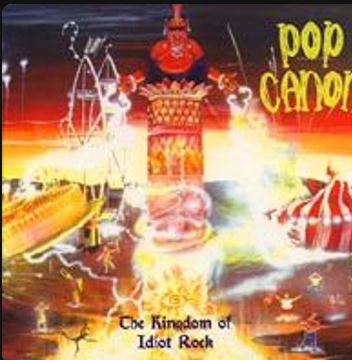
Our friend, Charlie McWhorter, a singer and visual artist, described us as a seven-headed hydra. And he drew that hydra. We put it on a tee-shirt. Charlie also did a painting that became the cover art for our first full-length album, The Kingdom of Idiot Rock. It featured a Satan/Buddha shooting lightning out of his fingers (which were in the classic metal devil-horn formation), burning into a dilapidated carnival. The members of the band were depicted dancing around and on the verge of falling into a pit to Hell. It was what Charlie said we sounded like.
I could probably get away with saying we were the greatest band you never heard of, and maybe it would be true, but it would be a cliche. There were a lot of great unknown bands in the 90s. There always are. But it was the greatest band that I was ever involved in. It was the greatest anything I was ever involved in.
I don’t know how many people get that, even for a short time. This is the story of how it came to be.
1994 – The Road to Gainesville
I was 22 years old. Before Florida, I’d lived in a few places in Alabama and Mississippi, but I considered myself to be from Birmingham. I’d lived there as a child and found myself returning as a college student. I’d married young, at 20, and Doris was two years older. While I finished my bachelor’s degree, she was getting a Masters in Library Science. When both of our degrees were done, we were ready for the next adventure. I had family in Gainesville and had spent time there. I knew a little about the music scene. I thought it would be a good place to set up shop.
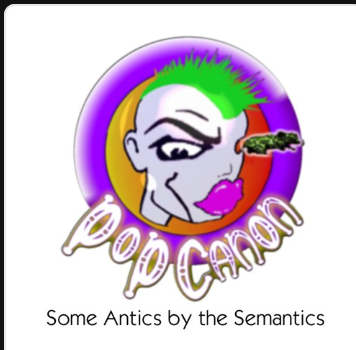
A relative had a house downtown, walking distance to all the music venues. We rented it and later bought it. I was writing songs at a prolific clip, and I’d put up a poster in a few prominent places advertising that I was looking to start a band. I listed my influences and a dumb clip-art punk rock face that eventually evolved into our logo. I jammed with a ridiculous variety of people who didn’t quite fit what I was looking for. I played a couple of open mics. I was also trying to write a novel, working at a book store, and doing various sound experiments in the second bedroom that had become my office/recording studio. The band was something I wanted to do because it was something I’d always done, but I only had the vaguest notion of what this specific band would be. I wanted to do something bold, different. Not made for radio.
Doris and I became friends with another couple, Jim and Erica, via our regular presences at happy hour at the Covered Dish, the main indie rock venue in town. One day Jim got a call from Ned Davis, the bass player in a band called Planet Ten. They were playing a benefit for the Civic Media Center (a local alternative library and activist headquarters) and wanted an opening act. Since Jim had his finger on the pulse of the music scene, Ned asked him for a recommendation. He gave Ned my number and asked me if I could give Ned a tape of my stuff.
I got up the next morning, put a cassette in a tape recorder and pressed record. I picked up my acoustic guitar and played five or six songs then pressed stop. Then I went to meet up with Ned and give him my hot-off–the press demo..
1995 – Satanbuckle
At the Civic Media Center show, I played my singer-songwriter set to a moderate but enthusiastic crowd–just me and an acoustic guitar. Planet Ten did a set of upbeat, soulful pop rock. They were a massive band with a horn section and two lead singers. Afterward, Ned told me that they had another show at a coffee house down the street later that night and asked me to open for them there as well. And, he said, “Blue and I will back you.”
Blue Lang was the drummer for Planet Ten and became the first drummer for this then-unnamed project. We had a bigger audience at the coffee house show than we had at the CMC. Before each song, I quickly shouted a few notes to Ned and Blue like “This one is a I-vi-IV-V in G with an occasional E flat substitution” or “country blues in A”. It went off like we’d been rehearsing it for weeks. Or at least that’s how I remember it.
Afterwards, I approached Ned and Blue about making this a regular thing. “I think we wouldn’t have to rehearse much, based on what just happened,” I said. They said they’d give it a try for a while and see how things went. We played a show under the name Satanbuckle, and then decided to call the band The Semantics. It seemed like a perfect name for us with our songs about grammar and references to writers like Derrida and Rorty in our songs.
After a few weeks and maybe a couple more gigs, Ned asked me to come over to his house. He said if we really want to make a go of this band, he’d like to get another bass player and switch to lead guitar. We sat down and played some of the songs with him on guitar, and my mind was blown. He was a very good bass player, but what he added as a second guitar was far beyond what I had imagined for these often dumb indie rock songs I’d been writing.
1996 – Expanding Band
Enter Mike Murphy. He also came recommended by Jim and was willing to give us a try. He’d been a fixture in the Gainesville punk scene for a few years, including some notorious and legendary house parties I’d heard about even though they were before my time. And he played a five-string fretless bass.
As the Semantics, we recorded a nine-song demo to help us get gigs and to sell on cassette at shows. Our friend Ron Richter had a recording studio in his house, and we knocked out the demo fairly quickly with Ron at the helm.
We were still only playing songs I had written, but we soon introduced a few that Ned had penned. We played regularly every few weeks, rehearsing about once a week at Mike’s house. He had a dedicated band room with a P.A. system, a valuable asset to any band.
Eventually, Ned told me he’d like to introduce some horn parts to some of the songs. Unbeknownst to me, he’d already been working on some arrangements and had shared them with the horn section of the now-defunct (de-funked?) Planet Ten. With Don Undeen on saxophone and Alyson Carrell on trombone, the sound of the band expanded into strange new territory that I didn’t quite know how to navigate, but I was loving the ride.
We had been very early adapters to a new thing called the World Wide Web, and we had made ourselves a web page (Mike and Blue both worked in tech, and I was a competent enough HTML coder myself). Our primitive website came to the attention of an existing band called the Semantics. They were from Nashville, had albums out already, and sent us a cease and desist on our choice of name. After much debate, laughter, and tears, we somehow came up with PopCanon as a replacement. It was a nod to the wide influences from across the canon of popular music in all its genres.
People, including some of our most fervent fans, never quite got how to spell it. Most commonly, we’d see it as Pop Cannon, the extra space and n giving it a very different meaning than what we intended. Even after spelling it out in the first verse of Ned’s “PopCanon Fight Song” (e.g. “Here’s how we spell our name: P-O-P-C-A-N-O-N”) people got it wrong ALL THE TIME. But we persevered with the absurd, hard to spell name because everything else we’d thought of was much, much worse.
1997 – The Kingdom of Idiot Rock
Under our new name, we recorded our first real album, The Kingdom of Idiot Rock with cover art by Charlie McWhorter. It included the “PopCanon Fight Song,” which had become our opening number at most shows, as well as other fan favorites. We worked with Ron Richter again, and the recording process was madness. We indulged every whim. We did remixes with cartoon sound effects. Ned screamed backup vocals through the pickups of his Les Paul. We put vibraslap on EVERY track (btw, two other albums recorded that year in home studios–the debut album by Ben Fold Five and Fashion Nugget by Cake–also had vibraslap on EVERY track). We’d also recruited Don’s girlfriend Lorien Carsey to play violin. She was in the band for a few months, but soon after the album came out, she moved away, becoming the first member to leave us.
Songs on the album referenced authors and philosophers: Robert Coover, James Joyce, Rene Descartes, and Thomas Pynchon. We wrote a song in celebration of the Tampa band Clang. Ned wrote “Code Name: Snossage” featuring dueling bass parts. We had songs in five, seven, nine, and eleven. We had dissonant screeches, skronks, and string swipes in every open space. It’s possible that “Curse of Clang” had every time signature ever heard in a rock song. Maximalism at its most absurd. We were truly the court jesters in the kingdom of idiot rock.
We managed to partner with a new company called CD Baby for international distribution of the album and got 200 copies pressed in fancy “eco-packaging.” We sold tens of copies, perhaps even dozens. Something was off though. The mastering hadn’t quite worked right, and people told us the recordings didn’t capture the energy of our live shows. We couldn’t afford to have another batch officially printed, but we burned our own, manually affixing labels and cutting liner notes from copies we’d snuck through work xerox machines.
Using the same DIY techniques, we retroactively repackaged the original demo tape as a CD called “PopCanon: Some Antics by the Semantics.” We (mainly Alyson) screen printed our own t-shirts and stickers. We started screen printing our name and logo on anything we could get our hands on cheaply – underpants, washcloths, spatulas. It was at this point that it truly began to transcend all expectations.
But as happens in many relationships, when I got comfortable, I started taking it for granted. Blue was the next person to leave the band, justifiably fed up with constant barbs about his playing too loud or too sloppily. Though these comments didn’t only come from myself, I knew he was right, and I had let myself get carried away with too-clever-by-half quips and taken it too far on many occasions. Our parting was as amiable as it could be under the circumstances. But drummers were hard to find. Good drummers were almost impossible to find because they were all in ten bands already.
Harry Monkhorst from our sister band Squeaky found one for us, a student from Orlando named Robby Copeland. He was the perfect fit for us and one of the best drummers I’d ever seen. This was the lineup that would last for the remainder of the life of the band and beyond.
1998 – PopCanon Covers It Up
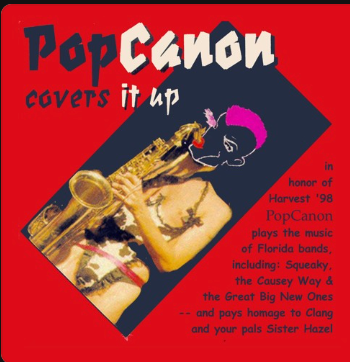
Before Blue left the band, we had recorded a handful of other songs that we released as an EP. About half of these were covers of songs by bands in our general orbit (“Snell” by Squeaky, “War Machine” by the Great Big New Ones, “Thank You God” by Clang, and “Bitch/Dysfunctional Riot Grrl” by the Causey Way). Two songs were inspired by other bands (“Curse of Clang,” which was also on Kingdom and “Give It Up for the Percussionist,” a tongue-in-cheek parody of rising rock stars Sister Hazel). We ended the album with a rousing cover of “The Hungry Wolf” by X.
At this point, we’d become known for our lively stage shows. When not occupied with horn parts, Don and Alyson would work the audience, leading them through dance moves. Following their lead, the audience had learned to hop along with us on the 9-beat of the wonky midsection riff in “Merimble.” They’d all shout “6-6-6” as the count in for “Fishbee Island.” Don had gotten a reputation for outrageous costumes, in particular the notorious “cow teddy” that appears on the cover of the CD.
The cow teddy had been a wedding present for Erica from one of her relatives. It was obviously too ridiculous, even for her, and she’s a pretty ridiculous person, so it became an ongoing prank that someone in our gang would hide the teddy somewhere in another person’s house. When that person found it, they’d repeat the prank with someone else. When it ended up with Don, he decided to keep it.
1999 – D’Art and Pricksongs
D’art was the first featuring Robby on drums, and we got Mike Rotolante to produce it. We recorded the base tracks at Mirror Image Studios and did overdubs at Rotolante’s house. Our songwriting, as individuals and as a team, had gotten more sophisticated. Some of the songs were still rather silly, but the arrangements were getting more baroque. Alyson contributed a masterpiece of art rock composition called “Mina Loy,” and Don wrote an off-kilter rap song with Beefheart chords called “Ironica.”
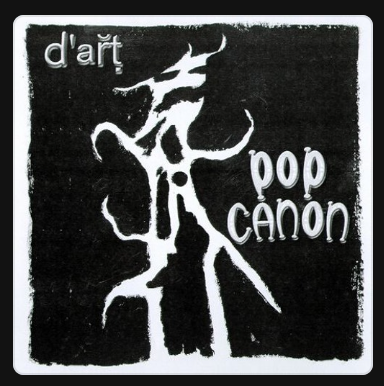
The art for the album cover was a painting of a sculpture–a reference to what the album represented to us: this is art that is about art that is about art, and so on. An infinite mirror image. What could be more post–modern? The sculpture was by Mike’s roommate Missy Ricardo, and we commissioned local artist James Lantz to do a painting of the sculpture.
Many of the songs on the album fit in with this theme, particularly “Arthole,” “Make Reference,” “Mina Loy,” and “I’ve Got a Theory.” Arguments can be made (and will be done in the liner notes following) for the rest of the songs on the album aligning with that general post-modern thrust if not the specific theme of art commenting on other art.
The songs on Pricksongs and Descants were recorded largely at the same time as those on D’art, though I recall that some were recorded at Ron Richter’s newly built studio. The idea was that it was a compilation of “B-sides” – songs that we had that just didn’t fit anywhere else. This included another Alyson song, the retro-novelty song “Penis Envy,” and an extremely goofy song I wrote in middle school called “El Gordo.” Novelty was the key. A lot of the songs were extended jokes. There were also a couple of cover songs we had been asked to contribute to compilations – “Up the Junction” by Squeeze and “Eddie’s Teddy” from the Rocky Horror soundtrack.
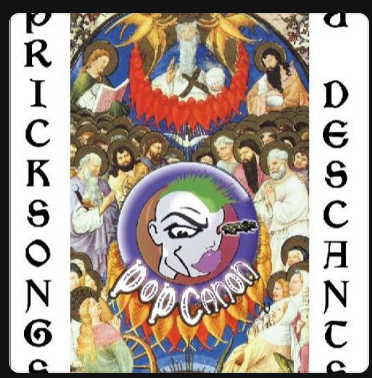
The title of the album came from a collection of short stories by Robert Coover. A pricksong is a 15th-century term for music song from notation of dots or “pricks,” as opposed to by ear. It preceded the modern form of music notation. A descant is a medieval form of polyphony. It’s easy to see how we could relate to these terms, especially coming to them through the lens of a post-modern fiction writer like Coover. I made the cover art by superimposing the punk rock loser logo onto some medieval religious iconography.
2000-2001 – Nearing the End
We continued playing shows, touring for three or four days at a time when possible, with one longer tour that took us up into the northeast. We used our vacation time from our day jobs to tour. Our only hope financially was to break even, but even that wasn’t really important. We just loved to rock. We got some occasional press, though there is little evidence of that still in existence, according to the internet. One critic from Atlanta called us “funkless art dross like Gleaming Spires or Oingo Boingo.” We considered that high praise. Another called us out for how often we mentioned Satan and then (contradictorily) said we should be entertaining small children.
In 1998, I’d developed a relationship with Erica that caused us both to get divorced. I won’t air the dirty laundry here (my own or that of others – plus, that’s a WHOLE other novel), but it created some tension within the band for certain, as did a relationship between Alyson and Mike that was starting to fizzle out. We persevered though, and it was I guess early 2001 when Ned called up his friend Alex Fernandez to come down and interview us for a possible documentary project.
We soon learned why. Ned’s wife was pregnant, and he wasn’t sure if he would be able to continue with the band. Alyson had started making plans to move to Chicago for law school. Soon, Mike had an opportunity to move to San Francisco, and I had an opportunity to move to New York. We started planning our Last Show Ever, which would be caught on tape by Alex’s cameras and recorded by Rotolante.
It was a rather insane affair. Before the club opened, we covered the dance floor in bubble wrap so that when people jumped up and down during the show they’d pop the bubbles. I’m not sure how we thought that would enhance the experience, but we did it. We had guest horn players. We played for at least two hours. Our friend Balzac came on stage and set his crotch on fire to introduce the song “Arthole.” By the end, Ned had smashed a guitar to pieces, and I was completely naked. Some of our friends had the bright idea to come up on stage and assault us with cream pies at the end of the show. As you can see if you watch the documentary, we weren’t amused by the gesture. It put a damper on an otherwise joy-filled celebration of what we had achieved over the past five years.
Ned also left Gainesville, moving to Rochester, New York, and then to Alexandra, Virginia. Don moved to New York, and we were in some bands together up there. At the time of this writing, he is currently in Montreal, and I’m back in Birmingham. Alyson is still in Chicago and Mike in the Bay Area. Robby plays with several bands in the Orlando area. We have managed to play a few reunion shows over the years. At first they happened every year or two, and then every few years. The last one was in 2016.
We have a show planned for summer of 2026 – the first in ten years. It could be the last, but we don’t know that for sure. Don and Alyson will not be able to join us for personal reasons, so we’re reverting to a version of what we originally were, a four-piece rock band. We’ll still make far more noise than is necessary for four people, especially given how fucking old we all are now.
This document, whatever it is at the moment and whatever it turns out to be, is by no means a complete biography of the band. There are dozens of stories I could tell, and maybe one day I will. But for today, I just wanted to get down the bones of the story because it’s never been told, and I really think it should be.
To be continued?
– M. David Hornbuckle, 19 February 2026, Birmingham, Alabama
Appendix 1 – Some Antics by the Semantics Track Commentary
01 Punk Rock Loser
As with many PC songs, the concept of “aboutness” is elusive. Most songs aren’t so much “about” something as they refer to, comment on, circle around. I think in this song, the speaker is commenting on the pressures of young middle class life–to be cool, to listen to the right music, to hold down a job. The speaker likes classic rock, has a Led Zeppelin poster on his door, but he sees that’s no longer cool. He lashes out at the cool people of the world calling them collectively “You punk rock loser!” Ultimately, he can’t cope with the pressure, gets fired for smoking weed, gets an STD and no longer has health insurance.
Musically and lyrically, it’s a deceptively simple song with a 1950s-style chord progression and self-deprecating lyrics that tell a straightforward story. Ned’s musical reference to “Stairway to Heaven” in the outro delightfully fits right in with the established harmonic structure of the tune.
02 Things About Which
An early version of this song before the horn section joined the band. I initially wrote it after seeing Sebadoh at the Covered Dish, and I was struck by the riff in “Licence to Confuse” built around a simple D chord. I went home and tried to put together something similar. The narrative was inspired by two real-life events. One of my co-workers was living with her boyfriend, but her parents didn’t know they lived together. Whenever the parents came over, he would move all his belongings out of their house. Similarly, Jim and Erica (mentioned previously) had a roommate named Woogie whose mother was kind of a religious freak. The three of them had several decorative candles around their living room, especially on the fireplace mantle, and they would put them away whenever Woogie’s mom came over because she thought they were satanic. The grammar touchpoint of the refrain came to me out of nowhere. A funny thing to quarrel about (I mean, a thing about which to quarrel).
I recall that initially, I’d only written two verses to the song, and after our Satanbuckle show at the University Club, in the back parking lot. Ned told me the song needed a third verse to round on the narrative. Together we hashed it out, and about ten minutes later the song was complete, at least lyrically. Listening to this early version, it’s not just the horns missing but also a lot of the flourishes that gradually got added through repeated live performance, notably the “Doh doh yo” refrain we do over a C flat-5 chord in the intro.
03 – Applying fr yr Job
When I first wrote this song, I called my friend George Mostoller and played it on his answering machine. The next time I talked to him, he said “I like your ‘monster march’ song.” I don’t know what made me think playing that dissonant F# descending bass line would somehow work. On the recording, Mike’s bass tone is truly a monster sound. Doubled by Ned’s guitar and later in live performance by the horns, it became one of the most rocking numbers we did live. The noise jam in the middle would get extended indefinitely live, sometimes encompassing one or more other songs before resuming into the third verse. Then we started playing “Applying fr yr Job” in the gap after “Stop” in ‘Little Green Men,” adding to the song within a song within a song effect.
I’m not sure where the idea for the lyrics came from. I think I was just riffing, and one idea led to another. I remember that it all came together pretty quickly. Live, the lyrics “If I called you every night and told you I was dead” became “told you I was Ned.” Too clever by half.
Given my comments about “aboutness” above, I suppose I should say something about the middle section – “This is a song about loyalty / This is a song about trust.” These claims are are immediately discredited when followed by “And if you believe me when I’m singing like this / I should be talking to you about a bridge.” “Bridge” being a reference both to the old joke “I’ve got a bridge in Brooklyn to sell you” and the self-referential metacommentary of the lyric occurring in the “bridge” of the song.
04 – Astral Projection
I wrote this song a couple of years before PC when I was a college student. Before a philosophy class while waiting for the professor to show up, the topic of astral projection somehow came up in conversation, and everybody started riffing. One guy said, “Sex is easier to come by,” which I brazenly and guiltlessly stole. I composed the whole song in my head while walking home from the class and learned it on guitar when I got home. The idea was that it was a sort of vaudeville-style novelty song, something you might hear on Dr. Demento. It became one of our most requested songs. I have to admit that the “woo-ee-oo” vocalized theremin effect in the chorus caught on a LOT better than I ever imagined.
The recording is live at the Covered Dish. I don’t think Bill Bryson, who ran the club, was thrilled that we didn’t ask his permission before recording it and putting it out. Our bad. On the original demo tape, this was at the end of Side 1.
05 – Little Green Men
I wrote this song when I was still in high school and had recorded a version with my high school band “Animal Farm.” Originally, the main guitar riff was in standard time, but Ned clipped a beat off the end to put it in seven (a favorite Ned trick). We later re-recorded this song with the horn section for Pricksongs. Like “Things About Which,” this early version lacks additional ornamentation that came later through repeated performance. I noticed an extra beat leading into the verses that we later took out to keep the whole section in seven like the riff. It sounds weird to hear it that way now. It’s even weirder if I listen to the bare bones high school version.
The “stop” in this song was always an opportunity for some kind of mayhem before resuming with “in the…” leading back to the chorus. As I alluded to earlier, it became the framework for what we later called the “Semantics Medley” a double-bunned cheeseburger of LGM (part 1) / Applying fr yr Job (part 1) / Onion Man (plus possibly other songs) / Applying fr yr Job (part 2) / LGM (part 2).
06 – I Stole a Mantra
Immediately when I played this song for Ned, he noticed a similarity between the main riff and “Gootis” by Gainesville hard rockers Whoreculture, so a few other “Gootis” references got casually dropped into the song as it evolved. It’s a kind of crazy riff that rings out a Bb and D in between a bass line that bounces from G to E to F to A. Like “Applying fr yr Job,” it really shouldn’t have worked. Glued together with a more traditional diatonic chorus chord progression and a moody, sort of psychedelic bridge, somehow it held together.
The lyrics were partly inspired by Jeff Goldblum’s cameo in “Annie Hall,” (a party scene where he’s on the phone saying “yeah, uh, I lost my mantra”) and partly by my college-era fascination with Buddhism. The line “Drawing pictures of myself” is an early version of the self-reflexive commentary on post-modernism and art that continued throughout our recording career.
07 – Alternative Lifestyle
This is a quirky little rockabilly style song that I always liked. I think I was trying a sort of Robyn Hitchcock type of thing, especially with the bridge, which became much bigger and more rocking when interpreted by the full band. My guitar sounds like shit. There is a better recording of this song by my New York-based band The Dixieland Space Orchestra.
08 – Onion Man
There was briefly a cajun sandwich shop in downtown Gainesville that served a “Junebug” – raw sweet onions and mayonnaise on a toasted baguette. I was kind of addicted to it and started making a version of it at home. One day while chopping the onions, I just started singing “Vidalia, Vidalia. Be my onion woman / Vidalia, Vidalia I want to be your onion man.” It went over and over in my head and eventually became a song.
09 – Paradigm Shift
I mean, it’s kind of an obvious joke for someone like me.
Appendix 2 – The Kingdom of Idiot Rock Track Commentary
01 PopCanon Fight Song
This song begins with feedback from my acoustic guitar, followed by Ned’s vocalized imitation of said feedback Ned brought this song in without my having any previous knowledge he was working on it, so it was a delightful surprise. Favorite line: “We like to play first, and then we go to sleep.” The instrumental section begins with dueling “La Bamba” guitar solos from both myself and Ned. The song ends with a another dueling guitar solo before the horns come in with the main melody leading to a third and final spelling of our name: P-O-P-C-A-N-O-N. Good times.
As this is the first song in the list that I didn’t compose myself, I can’t comment on the writing process. Perhaps Ned will do his own version of this at some point.
02 Ice on the Sidewalk
Technically a three-chord wonder (B, A, and C# minor), but it sounds more complex because of all the ornamentation. One day when I was still in college in Birmingham, I stumbled across something on the sidewalk that looked like ice, but when I poked it with a stick, I discovered it was some sort of clear gelatin. So the first couple of lines are quite literal. The rest is largely wordplay. The central motif of the song–the Storyteller–is a fountain statue in the Five Points South area of Birmingham (thus the reference to a pentagram). The craziest thing about the music in the song is the G diminished riff played over the C# minor and B chords in the prechorus. It really shouldn’t have worked, but somehow it does.
03 Merimble
This is another one from Ned, originally a called “Bumble”–a tribute to the band of the same name, which he had performed in a previous band, what anne likes. By the time it was put through the “PC filter,” it also contained musical references to the band Meringue, thus the portmanteau song title. In the middle section, Ned and I act out a comic strip drawn by Eugene Chadbourne from the liner notes of his album of Captain Beefheart covers. Young Eugene is listening to Trout Mask Replica, and his father (played in the song by Ned) comes in saying, “It sounds like you’re listening to two songs at once.” Young Eugene, played by me, says, “Fuck you, Dad. Get out of my room!” Man, we are nerds
04 Wanda Tinasky
Speaking of nerds…. This is another one with deep and obscure references. Wanda Tinasky was the “author” of some letters to the editor of a small newspaper in northern California in the early 1980s. Because Thomas Pynchon was known to be living in that area at the time while working on his novel Vineland, some people thought Pynchon was the real author of the letters. A literary critic named Don Foster eventually discovered they were actually written by an obscure beat poet named Tom Hawkins. The song contains a series of references to things Tinasky reveals about herself in the letters as well as some dumb puns and a couple of references to Pynchon himself (i.e. “Saint” Thomas).
Musically, it begins with a couple of dissonant chords leading into the main (E-F-G-C) riff. This was from a brief phase of trying to write songs that sounded like Archers of Loaf. I don’t think any of us ever agreed on the chords in the chorus, and we’re all playing something different, but it all gels together somehow.
05 The Reason
An anti-religion screed from the mind of Ned and one of my favorite PC songs to play. It’s chock full of Ned chords: thirteens, flat fives, and the like. Ned will have to fill in more details on the composition at some point.
06 Valentine’s Day
This originally came to me as a sort of parody of Morrisey. Like so many other songs, it evolved quite a bit as we played it. A perennial fan favorite from the “early, funny” period. 23-skidoo.
07 Rene Rene
The most beautiful song you will ever hear about Rene Decartes (and, again, I use the word “about” loosely). The lyrics toy around with jokes about Decartes and generally about other things French and/or 17th Century. Trivia: Descartes (1596-1650) was not contemporary with the Thurn and Taxis Postal System (1806-1867), nor did he live in the same part of Europe Thurn and Taxis served, so could not have received mail via that organization. I needed a rhyme for “x-y axis,” which is a reference to the Cartesian coordinate system used in geometry to this day. The melting wax and “evil demon” are references to Decartes’ Meditations, the source of the famous “I think, therefore I am” quote. In that same book, Descartes is the first philosopher to try to tackle what became known as “the mind-body problem,” also referenced in the lyrics.
I’m very pleased with the music I composed for this song and the horn/string arrangements Ned wrote for it. It remains one of the most complex pieces of music I’ve ever come up with. Lyrically, there’s a lot I’d do differently if I were writing it today, but it has its moments.
08 Fishbee Island
Ned wrote this song, and I want to say that he wrote it when he was in high school, if I remember correctly. It’s an absurdist narrative song, for which Dan Lord (singer of the band Pain and later Salve, with whom I currently play keyboards) made a lovely comic book, which we adapted into a calendar to sell at shows. A couple of years after this, we re-recorded this song live at the Florida Theater, a version that we now consider definitive. At the time of this writing, the audio recording has not yet been released, but you can find it on YouTube.
09 Bloomsday
Okay, the backstory behind this song is a bit crazy and already documented in a couple of places on the internet, so I’ll try to keep it short. On June 14, 1996, two events occurred around the corner from each other. One was a marathon reading of James Joyce’s Ulysses at an art gallery, for which I was scheduled to read Part 4: The Lotus Eaters. Nearby at the Hardback Cafe (local punk rock club), Pat the Bouncer was having himself crucified for his birthday, like literally. As it happened, the crucifixion happened at pretty much the same time as my turn to read, and most of the audience left the art gallery to go watch the spectacle at the Hardback. As Ned says at the end of “Fishbee,” it all really happened; it’s all really true. Only in this case, it really did happen.
10 Labyrinths
This tribute to writer Jorge Luis Borges came from Ned, originally written for a previous band. For a lot of young literary types of our generation (and I assume previous and future generations as well), Borges’ Labyrinths revealed possibilities for fiction writing we’d never before imagined. The jazzy chord progression is quite beautiful, and the lyrics are heartfelt, which is rare for us.
11 Too Many Mikes
This is a Ned song. I have no idea what it’s about, but it has a section in 11/8 time, which we count out loud in the recording (one of us counts to 11, which the other counts in half time to 5 and a half). Sometimes we got called a “math rock” band, but most of the time when we did play around with unusual time signatures, we were snarky and self-reflexive about it. When we did math rock, it was a usually a self-parodying version of math rock.
12 Code Name: Snossage
This is another anti-religion song from Ned, most prominently known for it’s counterpunctial dual bass lines. Rocks hard.
Some art student once made a music video using the song, but I don’t think it exists on the internet, and I don’t have a copy of it.
13 Treasure of the Temple
I came up with the angular rock riff at the heart of this song without putting much thought into it. It uses references to the Knights Templar as an extended metaphor for someone in a relationship keeping tightly guarded secrets from the other person. Or something. In typical PC idiot rock fashion, the outro features me playing the riff in 8 while Ned plays it in 7 (dropping the final note/beat) until they both come around to meeting up again.
Favorite anecdote about this song: One time Blue was chatting up a yoga teacher who asked him if he knew about Kundalini (a form of divine feminine energy believed to be located at the base of the spine). He said, “Oh yeah. There’s a reference to that in one of the songs my band plays.” Her: “Oh, what is the reference?” Blue: “Kiss my ass / You might unleash the demon hiding in my spine.”
I don’t think he got her number.
14 Robert Coover
This is me being obscure again. Robert Coover, in his tenure as a professor of Creative Writing at Brown University, developed a collaborative project for his students called the Hypertext Hotel. I think I read about it in a New Yorker article or something. Without really knowing much of anything about it beyond that article, I wrote this sort of angry and largely non-sensical polemic about it.
The other thing that brought this song about was that Gainesville musician Chris Ross told me a rock song couldn’t be written in Locrian mode, and I did this to prove him wrong. The end-result is so noisy, you can’t really tell, but if I played it for you slowly on acoustic guitar, a trained ear would be able to hear it.
15 The Curse of Clang
Clang was a band from Tampa, led by music professor Paul Reller, and this song is a tribute to them. I think this is the first song that Ned and I collaborated more or less equally on. I came up with the two main guitar riffs, and we hashed out the lyrics over the phone. We shared the stage with Clang many times, as well as with a spin-off band, The Great Big New Ones. The opening of the first verse “Five / seven / Nnine / eleven” is a reference to time signatures, and all of those times signatures are represented musically in the song at various points. That verse goes on to reference Clang songs “Pol Pot Pie” and “End Times.” The other verses individually characterize the members of the band one at a time. I still don’t know the real name of their drummer, known as “Rock Boy.”
Appendix 3 – PopCanon Covers It Up Track Commentary
01 Snell
This is a cover of a Squeaky song from one of their early cassettes. I don’t think their version ever made it to CD, much less streaming services. Squeaky was our favorite band and our best friends. They have opened for us at most of our reunion shows and will do so again at the one coming up this summer (2026, if you’re reading this in the future). They are an awesome band and wonderful people.
02 War Machine
The Great Big New Ones was an all female power trio featuring Corey Holt, the keyboardist from Clang. Our cover of their super catchy “War Machine” features Alyson on vocals.
03 Curse of Clang
Idem.
04 Thank You God
This is a cover one of our favorite songs by Clang. Clang and its members obviously featured heavily on this record.
05 Bitch/Dysfunctional Riot Grrl
This is a cover of a song by the Causey Way, a project started by Pensacola pro skater and painter Scott Stanton during a brief period when he lived in Gainesville. The band went on later to get signed by Jello Biafra’s Alternative Tentacles label.
06 Give it Up for the Percussionist
We jokingly referred to Sister Hazel as our “mortal enemies” because they were also from Gainesville, had a top-forty hit song, and were musically just about as opposite of us as a band could get. I wrote this song to make fun of them. Their singer Ken Block took it well and once graciously told me he thought the song was funny.
07 The Hungry Wolf
This was the only cover on the EP that wasn’t from a local or regional band. We did a lot of covers live but recorded very few of them. Most of the time, they were throwaways that we’d play once and discard. Others, like this one, we just really liked to play, and we’d include it in our set fairly regularly, especially if we were doing one of those two- or three-hour shows where we pulled out all the stops..
Appendix 4 – D’art Track Commentary
01 Things About Which
Although it appeared on the earlier Some Antics demo, this is what I’d consider the definitive version of this song. I made a video for it using Playmobil figures and stage sets that I made in PowerPoint and printed out. I interspersed the Playmobil stop action animation with footage from a live show at the Handlebar in Pensacola, and in one place I managed to make it look like the love footage was playing ona TV in one of the Playmobil scenes. I was pretty proud of that. I used the video as a way of learning how to use Adobe Premiere for a work project and ended up getting a pretty significant raise and promotion as a result.
I thought the video has since been lost to time, but Ned found a copy, and now it’s up on YouTube.
02 Impossible
I don’t know how I came up with this chord progression. I was surely just dicking around on the guitar and came up with it, but I always thought it was catchy. The lyrics toy around with some Alice in Wonderland references. Originally, I was only going to do the bridge once, but Ned liked it enough that he convinced me to put it in again at the end of the song.
03 See You
This is a Ned song with a cool guitar solo and lovely horn arrangements. It’s our second most ska song, after Tin Can.
04 Arthole
My old friend and past songwriting partner George Mostoller sent me the lyrics for this song and asked me to set them to music. He also had not written them, but had gotten them from an old college friend of his named Tim Moran. The lyrics sat on my living room coffee table for a few weeks, and one day a melody for it popped into my head. I picked up a guitar and just knocked it out without too much thought. It became a fan favorite, and I continued to play the song in my New York bands after PopCanon broke up.
05 Make Reference
This is another one where I was dicking around with what I call “indie rock chords.” These are chords that have easy fingerings but aren’t traditional chord shapes and often feature open strings that create dissonance with other notes in the chord. Often the chord shape moves around the fretboard in a way that’s, again, easy to play but creates a progression of chords that aren’t diatonically related. The lyrics to this are mostly non-sensical references to philosophers of language, which is something I was really into at the time.
06 Mina Loy
Alyson wrote this beautiful tribute to the modernist poet/artist with some assistance from Ned.
07 Owed to a Weasel
I wrote this song to vent some frustration about my boss at the time. Some of the lyrics are not that great, but I stand by my rhyming “peachy” with “Nietzsche”
08 Hey Hey Hey (We’re a Klezmer Band)
I don’t know. It seemed like a good idea at the time.
09 Ballyhoo
We had developed a pretty big following in Montevallo, a small liberal arts school about thirty miles outside Birmingham, and their philosophy department commissioned us to write this as a sort of theme song for their annual debate. The philosophy student who wrote up the contract, Jim Fahy, is still a good friend of mine and a pillar of the Birmingham music scene.
10 I’ve Got a Theory
This song was inspired by a Monty Python sketch where John Cleese is featured in drag as a pompous academic with a new theory about the Brontosaurus, which is “All brontosauruses are thin at one end, much much thicker in the middle, and thin again at the far end. That is my theory. It belongs to me. I own it and what it is too.”
11 Ironica
Don brought this song in. It’s the only Don Undeen original composition in our catalog. In my opinion, it’s a better song than the one by Alanis Morissette with a similar name and has a much better understanding of what irony actually is.
12 CaliMariAchi
Ned wrote this iafter we went to see Eugene Chadbourne do a concert of “insect music” during his “Insect and Western” period.
13 Lights Out
This is about as close as I get to a sincere piano ballad.
14 The Composition: Brainstroll
Ned wrote this as a “tribute” to Gainesville jazz fusionists Mindwalk. It’s very rocking, and I really like the moody Pink Floyd sounding part in the middle.
Appendix 5 – Pricksongs and Descants Track Commentary
01 Little Green Men
The main difference between this version and the “Some Antics” version of this song is the addition of the horns. But it also became notably peppier with time, and the 7/8 sections got tighter.
02 Cult of Mary
I wrote this song in early 1995, and it was on my recently rediscovered demo tape that I gave to Ned to get the gig opening for Planet 10. It has goofy lyrics and a vivacious garage rock chord progression, similar to “Paradigm Shift” and other songs I was writing around then.
03 Silly Putty
I was listening to Archers of Loaf a lot, and the idea of this angular guitar intro followed by almost brutally grunted vocals with a cheerleader rhythm appealed to me. Obviously, for those of us of a certain age, the reference to transferring a comic strip image to a wad of Silly Putty is a cultural touchstone, and it seemed to me an apt metaphor for a relationship that is fun but shallow. I was working my first “office” job back then, and Erica and I used to fax each other random things, which we thought was hilarious, though it wasted a shit ton of fax paper.
04 Tin Can
Ned’s homage to Dave Thomas of Pere Ubu, originally recorded with What Anne Likes.
05 Double Jointed
My first wife Doris was double joined in her arms, and this was basically a love song to her, albeit a very goofy ass one. The jazz chords were a notch more sophisticated than most of what I was writing around that time.
06 Penis Envy
I think this was the first song Alyson brought to the table. It had a basic 1950s chord progression and smart satirical lyrics. A fun number.
07 El Gordo
I literally wrote this song with my friend Will Prunkl when we were in 7th or 8th grade. I had always wanted to see what I could do with some of those very early songs if they were played by a full band of competent musicians, and now I know. Still pretty goofy.
08 The Shower Song
Another novelty song (there were a lot of those on this album). This was written by an old bandmate of mine from Mississipii, Kent Brown. He played it for me while I was visiting one weekend, and I became enamoured with it. I made him play it over and over until I had it memorized, and I brought it back to PC soon afterward.
09 Suitcase
This song gets stuck in my head sometimes. The lyrics are mostly simple wordplay, but they sound like they might mean something. The chord progression starts in C, goes up to C#, and then goes to D before returning to C, which is kind of nuts..
10 I’m So Squeaky
I think this basically evolved out of a noise jam and a sort of rap that I had concocted. I just liked the rhythm of “She’s the periodic table of the elements,” and then I was just riffing after that.
11 I Stole a Mantra ‘99
This was a remix by our friend Pat.
12 Parking Garage
This was my attempt to write a 50s style doo-wop wong. I have no idea where the idea came from to write a song about living in a parking garage.
13 Up the Junction
We recorded two versions of the Squeeze cover for a tribute album featuring a bunch of ska bands. We did one version in a more old school ska style and another in a Less Than Jake-ish skacore style.
14 Eddie’s Teddy
This was another cover we recorded for a ska tribute album, this time songs from Rocky Horror. I’m not sure how we ended up deciding to do this one, or if we were just assigned it. There are a couple of other incidental pieces on this album that aren’t quite songs, including something that starts out as “Frame by Frame” by King Crimson and then turns into a noise jam on the riff from Robert Coover.
Appendix 6 – Additional Songs Track Commentary
01 Trains in Trouble
George Mostoller sent me the lyrics for this and asked me to write music. We recorded it late in our career and possibly only made it public on our website and on the now defunct mp3.com. The lyrics are typical George absurdism, and I wrote the music to be sort of in his style – a sort of folksy, almost Grateful Dead-ish progression, but with a main guitar riff that translated nicely into a natural horn part, which took the song more in a late Talking Heads direction.
02 Do You
Ned and Alyson collaborated on this gorgeous moody song where, as Ned said in a newsletter at the time, we used the studio as an instrument far more than we ever did before.
03 Synchronicity II
This was another cover we recorded for a tribute album, and, in my opinion anyway, it’s by far the coolest of the handful of covers we ever put on tape. All three of these songs are being released on streaming services for the first time over the next few months leading up to the reunion show this summer.
 M. David Hornbuckle
Leave a comment